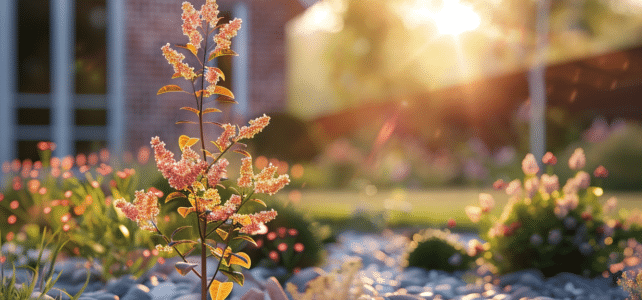
When planting a shrimp willow, an ornamental shrub appreciated for its colorful foliage, be sure to consider the safety distance from the house. This precaution prevents potential structural damage caused by the roots and facilitates maintenance. Adequate space also allows the tree to grow without constraint, ensuring its health and beauty. The rapid growth and adult size of the shrimp willow must be taken into account to determine the ideal location, guaranteeing safety and harmony in the home landscape.
Choosing the Location and Preparing for the Planting of the Shrimp Willow
The first step in cultivating the shrimp willow, whether it is Salix integra ’Hakuro-Nishiki’ or the ‘Flamingo’ variety, is to select the appropriate location. In the garden, the shrimp willow: distance from the house should be sufficient to allow for smooth development of the shrub and to prevent any interference with the foundations of the home. Experts recommend a minimum distance equal to the adult height of the shrub to ensure the safety of surrounding structures and to provide the plant with the necessary space for flourishing.
Soil preparation is a crucial step to ensure the proper growth of the shrimp willow. In in-ground planting, the soil should be worked deeply, enriched if necessary, to promote drainage and avoid water stagnation, which is harmful to the roots. In the case of container cultivation, it is essential to choose a sufficiently large container with drainage holes and to use a well-aerated and nutrient-rich substrate to meet the specific needs of the species.
Consider the ideal environmental conditions for the shrimp willow, such as exposure to sunlight and protection from strong winds. The shrub requires adequate sunlight for its variegated foliage to express its full beauty. However, in regions with scorching summers, partial shade during the hottest hours can be beneficial. Proximity to a water source will facilitate regular watering, especially during the first years of growth and in periods of drought.
Respecting Safety Distances and Good Planting Practices
When planting a shrimp willow, whether it is Salix integra ’Hakuro-Nishiki’ or Salix integra ’Flamingo’, safety distances are crucial to prevent conflicts of use and potential damage. The Civil Code stipulates clear rules regarding the planting of trees and shrubs near neighboring properties. Maintain a minimum distance of two meters from the property line for plantings exceeding two meters in height at maturity. This precaution avoids disputes and ensures that the growth of the shrub will not affect adjacent structures, including foundations and pipelines.
Pruning the shrimp willow, a regular horticultural practice, is essential to maintain its harmonious shape and stimulate the appearance of new shoots. Severe pruning, done annually, helps control the size of the shrub and prevents it from reaching a height that could compromise safety. This pruning should be done judiciously to avoid weakening the plant and making it vulnerable to diseases and pests. These include powdery mildew, septoria leaf spot, anthracnose, aphids, scale insects, and flea beetles, which threaten the vigor and aesthetics of the shrub.
When planting, consider the future maintenance of the shrimp willow. Plan for space to allow easy access for pruning and treatment of diseases or removal of pests. A good practice is to create a safety perimeter around the shrub to facilitate these operations without damaging surrounding plants and structures. Whether in container cultivation or in-ground planting, a preventive and responsible approach will ensure the beauty and health of your shrimp willow while respecting the immediate environment of your garden.