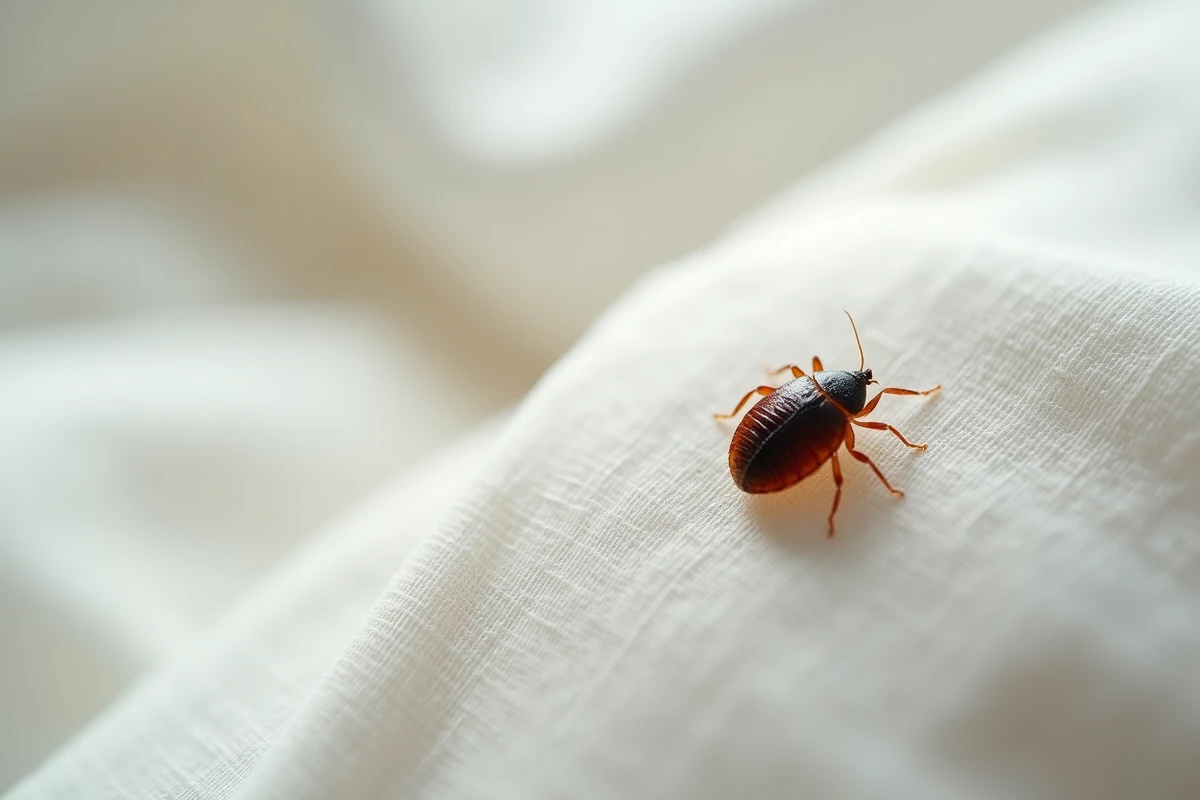
Several species of small dark insects settle in bedrooms uninvited. Their presence often raises the same question: should one act quickly or simply air out the room? The answer entirely depends on the identified species, as a small black bug in the bed can be a harmless dermestid for health or a blood-feeding parasite with real consequences.
Spotting a small black bug in the bed often triggers the fear of a bedbug infestation. Before panicking, a quick examination of the morphology and the traces left allows one to distinguish benign cases from situations that require intervention.
Identifying the black insect in the bed: morphology and reliable clues
Size, body shape, and nocturnal behavior are the three most discriminating criteria. Confusing them means addressing a problem that doesn’t exist or ignoring a problem that is worsening.
Bedbugs
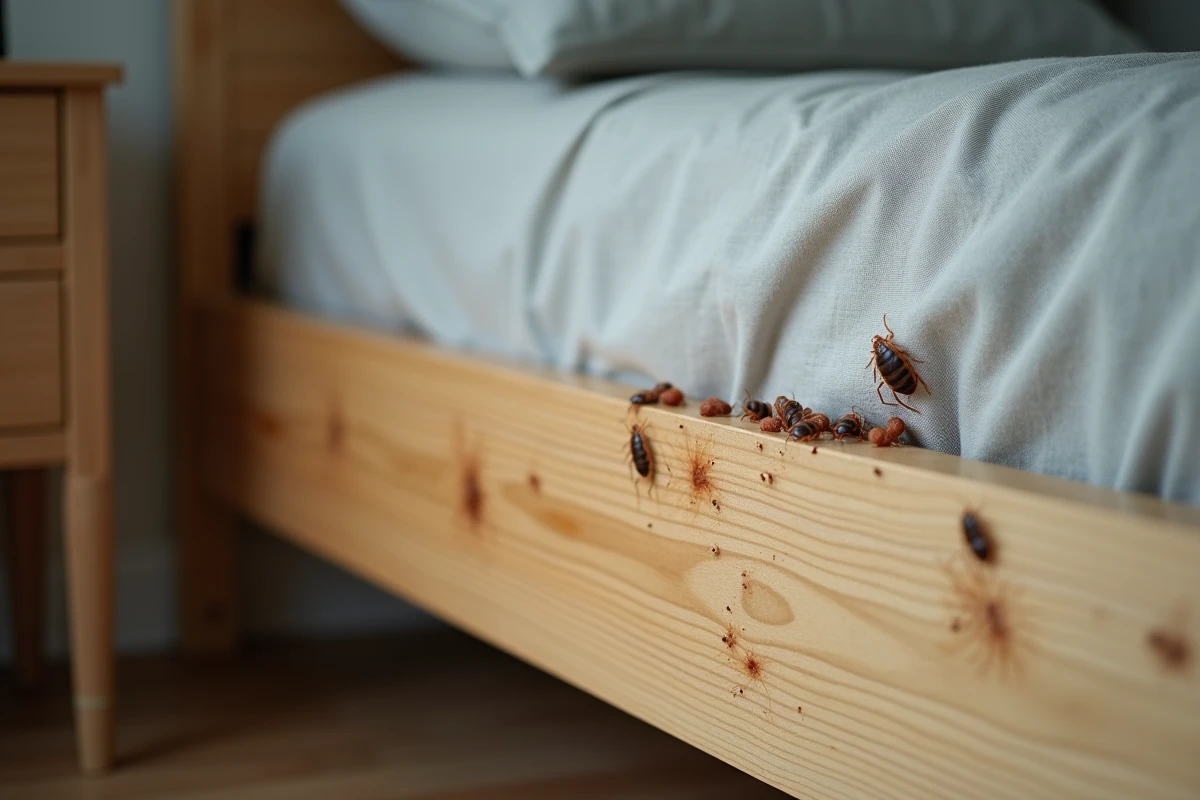
Oval and flattened body, brown-red to black after a blood meal. They leave small black spots on the sheet (droppings) and traces of blood. Bites appear in a line or in groups, often on the arms and upper back.
Anthrenids and Attagenids
The larvae of anthrenids (dermestids) are covered with fine hairs and measure a few millimeters. The adult, a small rounded black or mottled beetle, does not bite. These insects feed on animal fibers: wool, silk, pillow feathers.
Springtails and Psocids
Tiny, often grayish to black, springtails seek moisture and organic matter. Psocids (book lice), on the other hand, feed on microscopic molds. Neither of them bites.
Damage to textiles and bedding: anthrenids, moths, and triboliums
The small black bugs that do not bite are not all harmless. The larvae of anthrenids and attagenids in carpets cause significant material damage to fabrics, woolens, and collections. Wool blankets, natural carpets, clothes stored in bedroom drawers: nothing containing keratin is spared.
The tribolium, identified on entomological forums as a common beetle in bedrooms, is a pest of foodstuffs. Its presence in a bed usually indicates a poorly sealed stock of flour or cereals in a nearby room. It does not attack skin or textiles.
- Anthrenids and attagenids: irregular perforations in wool, silk, and feathers, sometimes confused with moth damage
- Triboliums: no textile damage, but contamination of nearby stored dry goods
- Bed moths (tineids): galleries in natural fibers, silky cocoons visible on the reverse of fabrics
- Springtails: no material damage, their presence indicates a humidity level that is too high in the room
For anthrenids, regularly vacuuming corners, under the bed, and inside closets significantly reduces the population. Washing affected textiles at high temperatures eliminates larvae and eggs.
Tiger mosquito in the bedroom: the truly dangerous case
Among the small black bugs found indoors, only one poses a documented health risk beyond a simple bite. The tiger mosquito (Aedes albopictus), a small dark insect striped with white, is now established in almost all metropolitan departments according to ARS Bourgogne-Franche-Comté.
This mosquito bites during the day as well as in the early evening. It can transmit chikungunya, dengue, and the Zika virus, placing it in a different category from bedbugs or anthrenids. Its presence in a bedroom is not related to a lack of hygiene but to the proximity of stagnant water (plant saucers, clogged gutters, forgotten containers in the garden).
Eliminating stagnant water points around the house remains the most effective measure. A bed or window mosquito net complements the protection, especially in areas where health surveillance is heightened.
Humidity and organic matter: why insects choose your bed
A bed brings together several conditions favorable to insects: body heat, humidity from sweating, skin flakes, natural fibers. Understanding what attracts them allows one to address the causes rather than the symptoms.
- High humidity in the bedroom: favors springtails, psocids, and psychodidae (small drain flies)
- Textiles made of animal fibers (wool, silk, feathers): attract anthrenids, attagenids, and moths
- Food scraps or stored goods nearby: attract triboliums, weevils, and cockroaches
- Pets sleeping on the bed: may introduce fleas, which are brown to black and jump
Daily airing of the room, maintaining a moderate humidity level, and regularly vacuuming under the mattress reduce the bed’s appeal to most of these species. A problem with insects in the bed is often an environmental problem before it is an insect problem.
When to call a pest control professional
Most of the small black bugs found in a bed do not warrant chemical treatment. Vacuuming, washing at high temperatures, and correcting humidity conditions are sufficient for springtails, isolated anthrenids, or misplaced triboliums.
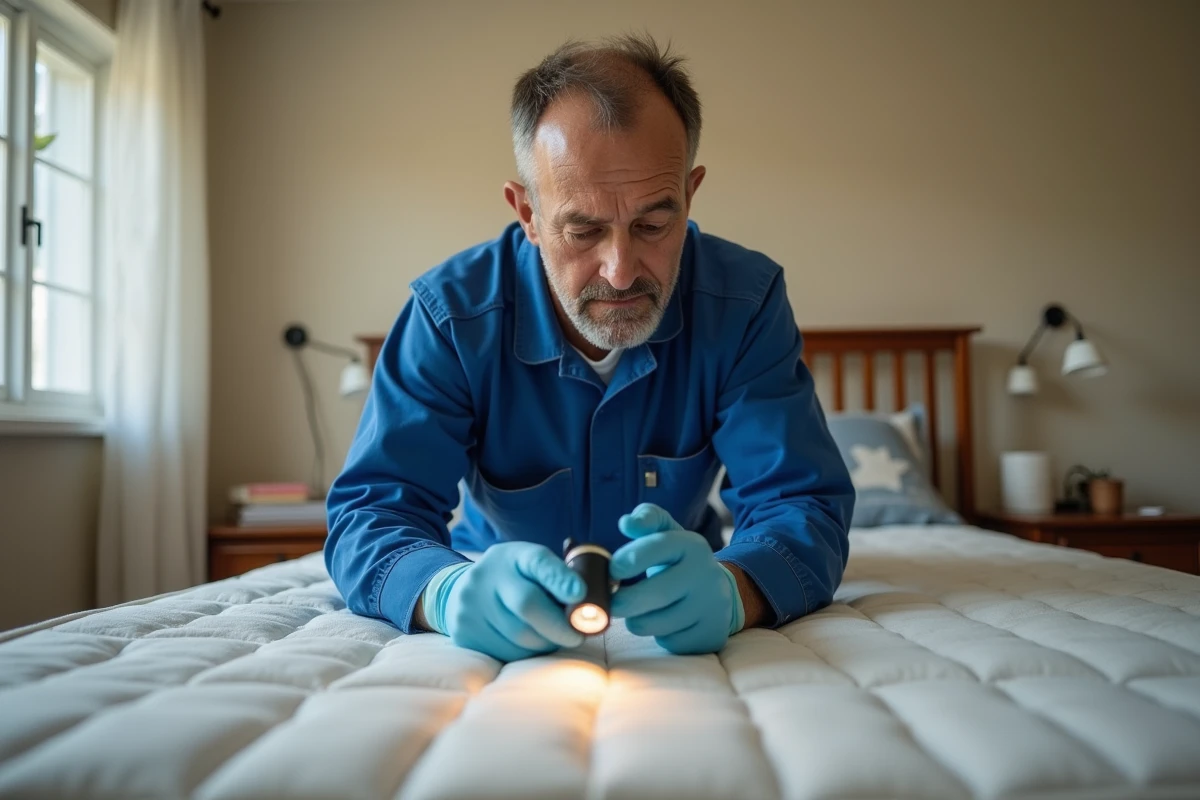
Two situations require specialized intervention. The first: a confirmed bedbug infestation, recognizable by bites in a line, stains on the mattress, and the presence of nymphs in the seams. Bedbugs resist over-the-counter insecticides and spread quickly from one room to another.
The second: a massive infestation of anthrenids affecting several rooms, with visible damage to clothing and carpets. An isolated dermestid does not warrant anything more than a vacuuming. Dozens of larvae found in several closets indicate an established infestation.
The rest falls under domestic management. Correctly identifying the species, addressing the attraction factor (humidity, accessible food, exposed animal fibers), and monitoring the situation for a few days provides a clear answer: temporary nuisance or structural problem that will worsen without targeted treatment.