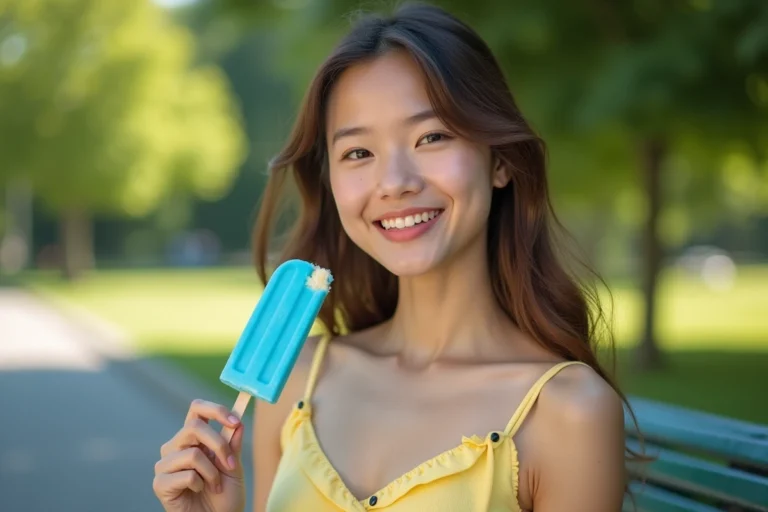
Sandra Baratier has 845,000 followers on TikTok and over 38 million likes. These figures place her account among the most active Francophone profiles on the platform. But one particularity distinguishes her online presence: her name circulates more through excerpts shared by other accounts, reactions, and compilations than through her own posts. How can we measure the gap between the image she constructs and the one that virality imposes?
Viral Reputation vs. Published Content: A Measurable Gap on TikTok

On TikTok, a creator’s visibility does not solely depend on what they publish. It also relies on what other users do with their content. In the case of Sandra Baratier, the SERP associated with her name mostly leads to discovery pages, compilations, and reaction videos, not to her editorial profile.
| Type of Content | Origin | Sandra Baratier’s Control |
|---|---|---|
| Videos published on her account | Profile @sandra_baratier | Total (caption, editing, tone) |
| Excerpts shared in reaction | Third-party accounts | None (no framing, no context) |
| Compilations and trends | TikTok discovery pages | Indirect (the algorithm decides) |
| Associated Google results | SERP, aggregators | Almost none (no personal site) |
This table illustrates a common phenomenon among creators whose fame explodes via the algorithm: the majority of their online image escapes their direct control. Sandra Baratier publishes lifestyle and daily content, but it is the out-of-context fragments that fuel discussions.
As detailed in Sandra Baratier’s interview on MaxiScoop, this dynamic generates a constant tension between what she chooses to show and what the public retains from her videos.
Controversies on TikTok Surrounding Sandra Baratier: A Fragmentary Treatment

Several online results mention disputes, tensions, or controversies related to Sandra Baratier. Their common point: none specify the exact subject or the timeline of the controversies. The available content remains allusive, often limited to catchy headlines or reaction thumbnails.
This ambiguity poses a concrete reputation problem. When an internet user types “Sandra Baratier controversy” into Google, they encounter fragments without context. No in-depth articles, no timeline, no structured right of reply.
Why TikTok Controversies Remain Poorly Contextualized
The platform favors short formats. An excerpt of a few seconds is enough to trigger a wave of reactions, but no one takes the time to trace back to the source. The creator ends up associated with a controversy whose original version has disappeared from feeds within hours.
- Reaction videos take an excerpt without showing the full video, altering the initial meaning of the statement
- The absence of a personal website or blog prevents Sandra Baratier from publishing a right of reply indexed by Google
- Content aggregators compile mentions without verifying the timeline or the truthfulness of the accusations
This mechanism is not unique to Sandra Baratier, but it hits harder creators whose fame relies on a single channel, without complementary editorial presence.
Sandra Baratier’s Journey: What Available Sources Reveal
Sandra Baratier’s media journey before TikTok remains very poorly documented. No accessible source mentions a precise start date, original media, or career steps prior to her TikTok account. Her public biography is summarized in a few lines: “Lifestyle, passion, and TikTok, I share my daily life with you.”
This lack of verifiable backstory contrasts with the size of her community. She is referenced as an ambassador for FBI Agency and offers personalized videos on the Vidoleo platform, where she boasts a 5-star rating based on verified reviews.
Monetization and Professional Positioning
Her TikTok profile mentions a stated goal for 2026: to reach one million followers. This transparency about numerical ambitions is rare among Francophone creators, who generally prefer to maintain ambiguity about their growth objectives.
- Ambassador for an influencer agency (FBI Agency), which involves paid partnerships with brands
- Present on Vidoleo for the sale of personalized video messages, with delivery in 24 hours
- Affiliate link to Temu visible in her TikTok bio, indicating a multi-channel monetization strategy
Her economic model relies on three distinct pillars: brand partnerships, personalized videos, and affiliation. This diversification is coherent for a profile with a strong audience on a single platform, where direct advertising revenues remain uncertain.
TikTok Reputation Strategy: Real Options for an Exposed Creator
Sandra Baratier does not have a personal website indexed by search engines. This technical detail has direct consequences: she does not control the Google results associated with her name. The top positions are occupied by TikTok, aggregators like Vidoleo, and third-party content.
For a creator in this situation, the control levers remain limited. Regularly publishing coherent content on her own account allows her to maintain a flow of “official” videos in the face of wild reposts. However, this does not resolve the Google SERP issue, where decontextualized excerpts continue to appear.
Sandra Baratier’s trajectory illustrates a reality shared by many high-audience Francophone TikTok creators: their reputation is built as much by what others make of it as by what they publish themselves. The absence of editorial presence outside TikTok amplifies this imbalance, and controversies, even minor ones, persist online due to the lack of structured content to contextualize them.