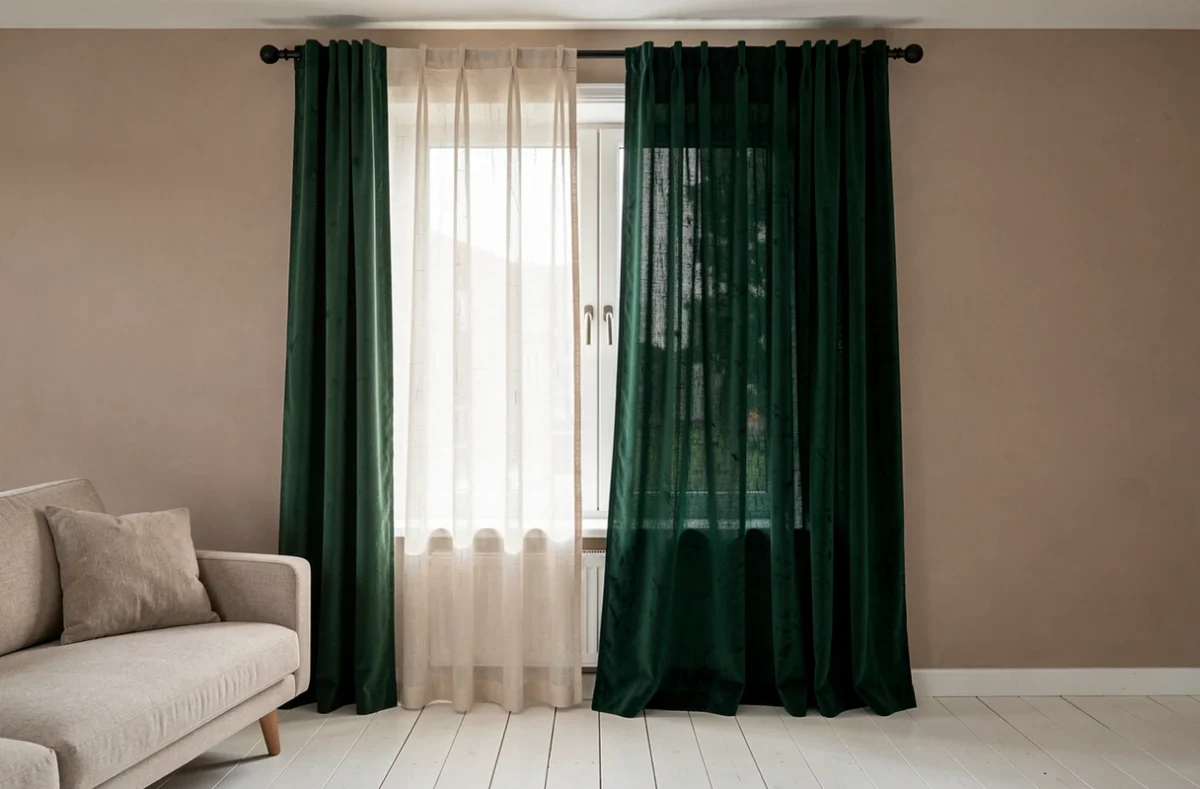
Combining two different curtains on the same rod means layering two textile layers with distinct functions or appearances on a single mounting support. The sheer curtain filters light, the opaque panel isolates or obscures, and together they create a modular window dressing.
Success relies less on color choice than on three often-overlooked technical parameters: the combined weight of the fabrics, the compatibility of the mounting systems, and the actual coverage of the window once the panels are closed.
Combined weight and mounting: the constraint that fabrics do not forgive
Before choosing fabrics, it is essential to check what the rod can support. A polyester sheer weighs little, but adding a velvet or thick linen curtain significantly increases the load on the supports. Undersized wall supports cause a gradual sagging of the rod, especially on wide windows.
The issue is not limited to static weight. Pulling and closing two panels every day exerts lateral tension on the ends and fixings. If the wall plugs are not suitable for the wall material (drywall, brick, concrete), the heaviest curtain will eventually strain the rings and deform the rod.
To learn how to combine two different curtains on a rod without risking this type of inconvenience, the first step is to weigh the two finished panels (including hems) and compare this total with the maximum load indicated on the rod’s packaging.
A budget expandable rod rarely supports two layers of fabric over more than one meter fifty. Steel rods with intermediate supports (one support every eighty centimeters or so) offer much better resistance.
Mounting systems for two curtains on a single or double rod
Two curtains on a single rod do not attach the same way as two curtains on separate rods. The mounting system determines the smoothness of the sliding and the final appearance of the drape.
Single rod with shared rings
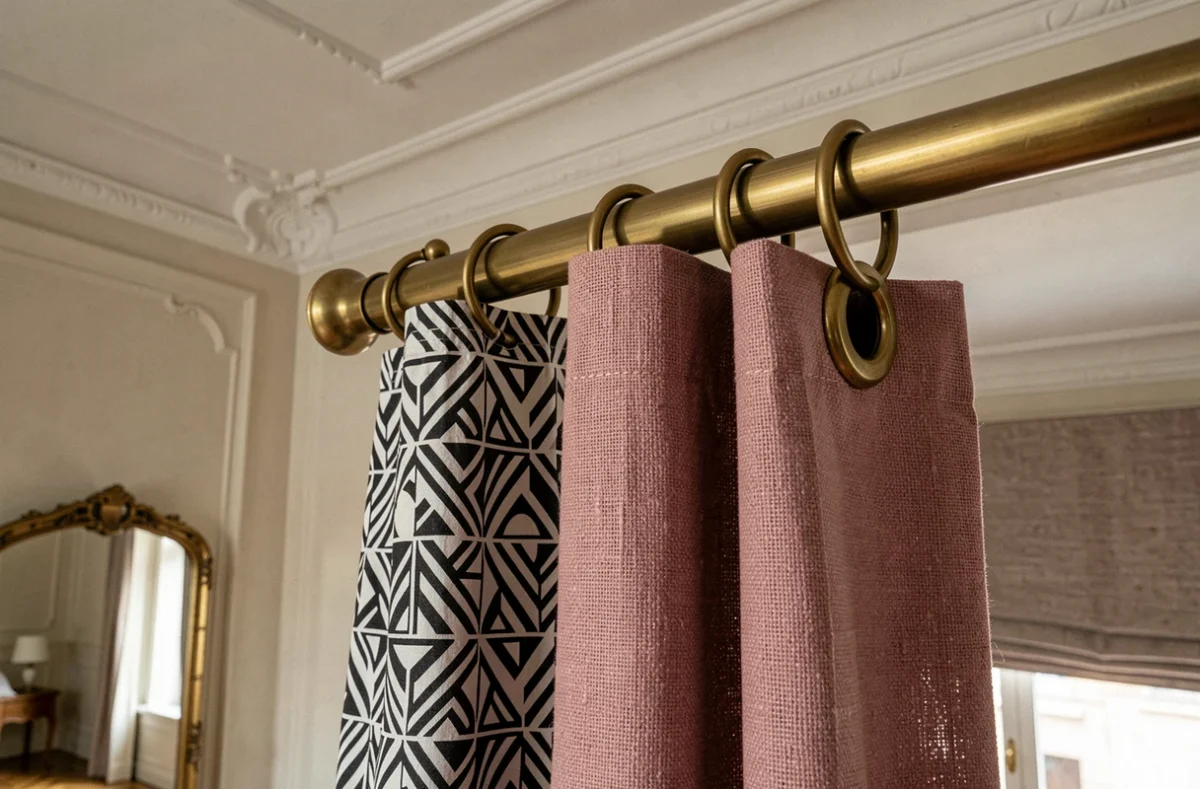
On a single round rod, the rings of the sheer and those of the opaque curtain are threaded onto the same rod, alternating or grouping. The sheer remains on the window side, the curtain on the room side. The downside: the two panels interfere with each other’s sliding if the rings are too numerous or too tight.
Double rod or double support
A double rod support fixed to the wall allows for the installation of two parallel rods on the same pair of fixings. The sheer slides on the front rod (near the window), while the thick curtain slides on the back rod. Each panel slides independently, making daily handling smoother and preventing premature wear of the eyelets or tabs.
- Clip rings: convenient for changing fabrics without sewing, but they can mark fine textiles like organza or chiffon.
- Integrated eyelets: provide a regular wave drape, suitable for thick curtains. On a sheer, eyelets weigh down the top of the panel and break the visual lightness.
- Hidden tabs or ruffles: the most discreet solution for sheers, which remain pleated without visible hardware.
The choice of mounting system also affects the height of the drape. Two panels fixed with different systems (eyelets for one, tabs for the other) do not fall at the same height relative to the rod. Hems must be adjusted accordingly, which most guides overlook.
Window coverage and actual obscuration
A curtain labeled “blackout” does not guarantee total darkness once installed. Light seeps through the sides, top, and bottom of the panel, not through the fabric. When two curtains overlap on a rod, the sheer generally covers the entire width of the window, but the heavier opaque curtain is often pulled toward the center or the ends.
The result: side light bands that the sheer alone does not block. To reduce these leaks, the blackout curtain must extend ten to fifteen centimeters beyond the window on each side. Therefore, the rod must be wider than the frame, which means checking the available wall space before purchase.
Another point: layering two fabrics does not automatically improve thermal insulation. The effect depends on the fit of the panels, the glazing, and the sealing of the window. A poorly fitted thick curtain allows air to circulate between the fabric and the glass, negating some of the expected benefits.
Combining materials and colors on the same rod without bad taste
The most reliable rule to avoid a cluttered look: limit the variables. If the two panels differ in material (linen and velvet, cotton and organza), keep the same color family. If the colors differ, keep the same material or at least the same type of drape.
- White or ecru sheer paired with a natural washed linen curtain: a sober duo, suitable for bright rooms and Scandinavian or country styles.
- Ivory sheer and curtain in fir green or midnight blue velvet: strong material contrast, which works in a living room or bedroom with light walls.
- Two cotton panels of different weights, one solid and the other with tone-on-tone stripes: a discreet combination that adds depth without overloading the window.
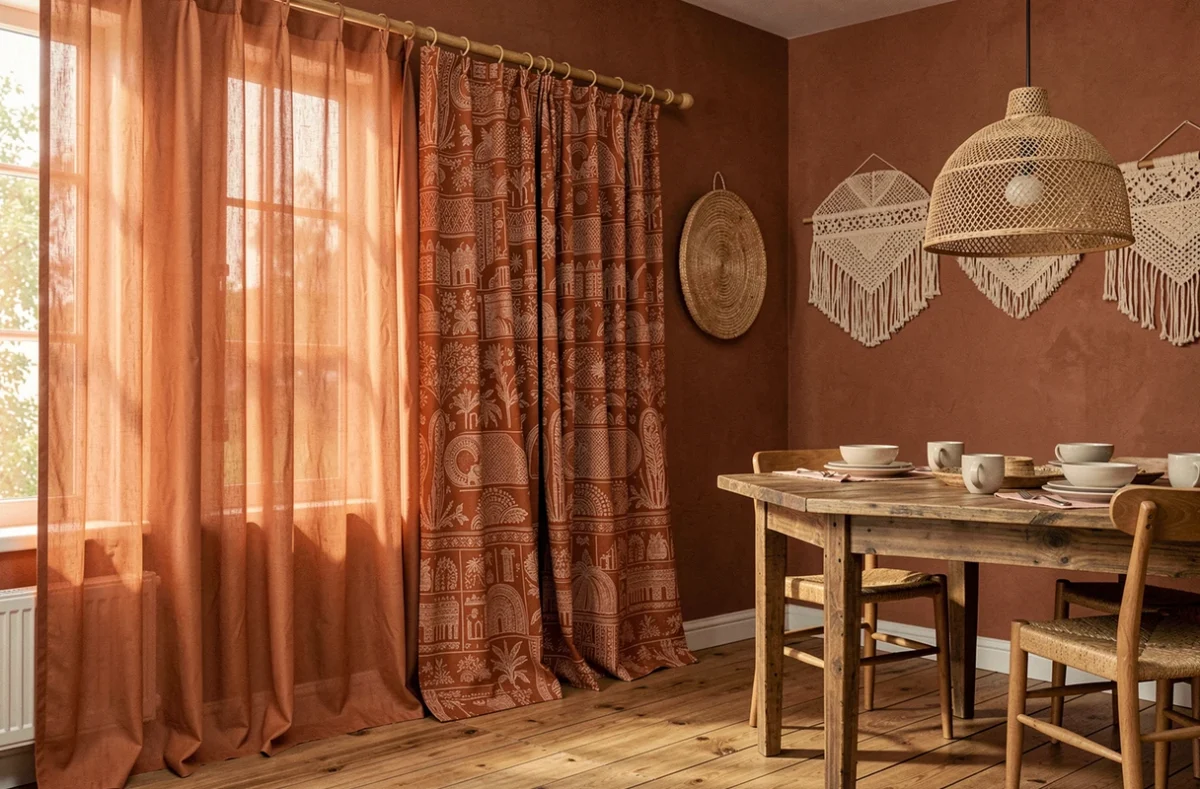
Combining a pattern with a solid works as long as one of the colors in the pattern exactly matches the shade of the solid panel. A multicolored floral patterned sheer against a burgundy curtain creates a disparate effect if the burgundy does not appear anywhere in the pattern.
The drape of both panels must reach the same point, floor or windowsill. A sheer that just brushes the floor while the curtain stops five centimeters higher gives an impression of negligence, regardless of the care taken in choosing the fabrics.
The simplest test before validating a combination: close both panels together and observe the result from the entrance of the room. If the eye hesitates between the two layers instead of perceiving them as a whole, it means the contrast in material or color is too stark for the size of the window.