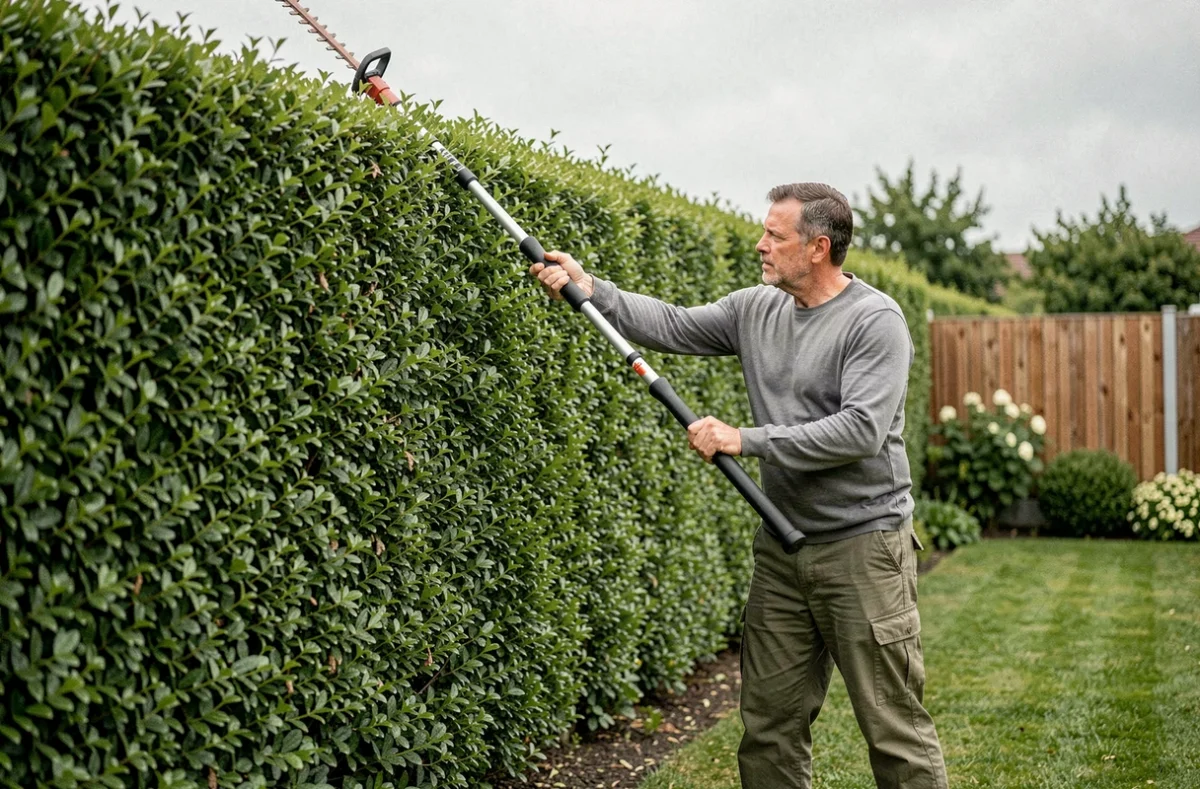
Trimming a tall or deep hedge without a ladder is exactly what a telescopic hedge trimmer allows. The pole extends your reach while keeping your feet on the ground. Now you just need to choose the right model, as the length of the pole, the type of motorization, and the weight of the device radically change the comfort of use.
Weight and balance of the telescopic hedge trimmer: the criterion that the technical sheet does not show
Have you ever held a heavy tool above your head for ten minutes? Fatigue sets in quickly, and the cut becomes imprecise. On a telescopic hedge trimmer, the actual weight in working position matters more than the displayed weight.
A device weighing a few kilos may seem light on paper. But once the pole is extended and the head is aimed at the top of the hedge, the lever arm multiplies the effort felt. Two details make a difference: the distribution of mass along the pole and the presence of a harness or shoulder strap.
Before buying, if possible, take the tool in hand at the store. Lift it vertically for thirty seconds. If the tension in your shoulders is already strong, imagine a one-hour trimming session. Models with the motor or battery located at the lower end of the pole offer better balance. You will find detailed comparisons on taille-haie-telescopique.com to identify the best-balanced models.
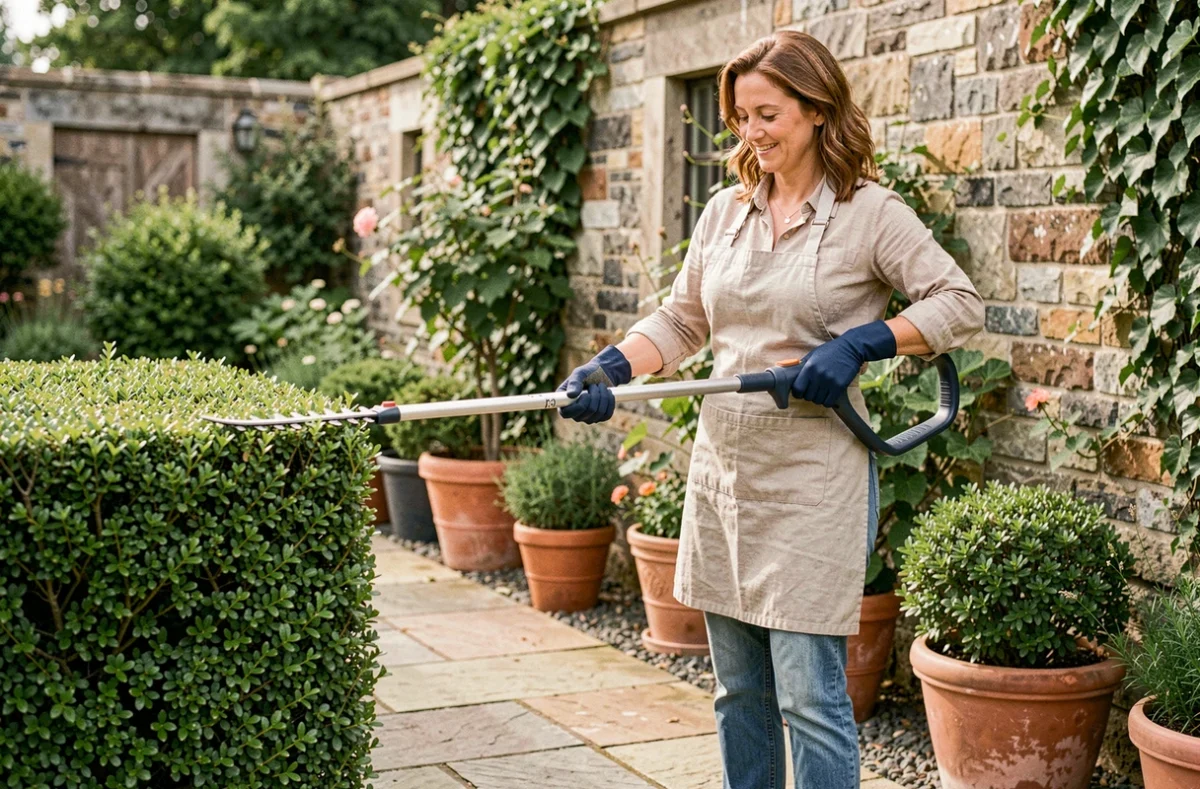
Battery, corded or gas: which motor for your telescopic hedge trimmer
The type of power supply determines the autonomy, noise, and maintenance of your device. Each technology corresponds to a specific use.
The battery-powered telescopic hedge trimmer
This is the most common choice for a medium-sized garden. No trailing cord, no fuel to store. The autonomy of a lithium-ion battery is generally sufficient for one to two hours of cutting, depending on the density of the foliage and the thickness of the branches.
Check if the model fits into a shared battery ecosystem with other tools from the same manufacturer. This reduces the overall cost, as you can reuse the same battery for your blower or chainsaw.
The corded (electric) model
It offers constant power without time limits. Its main drawback: the extension cord, which requires you to stay close to a socket and can hinder movements at height. For a hedge along the house, it is an economical and reliable solution.
The gas-powered telescopic hedge trimmer
Louder and heavier, it is intended for long hedges or thick branches. A gas engine delivers more power, but it requires regular maintenance (oil change, air filter, spark plug). If your hedge does not exceed a few dozen meters, this extra power is often unnecessary.
Blade length and cutting capacity: adapting the tool to the hedge
Why does this choice have such an impact? Because a blade that is too short forces you to make multiple passes, while a blade that is too long adds weight and reduces maneuverability.
- A short blade is suitable for narrow, well-maintained hedges with fine twigs. It allows for precise work on shapes.
- A longer blade covers more surface area in one pass and adapts to wide hedges or dense thujas.
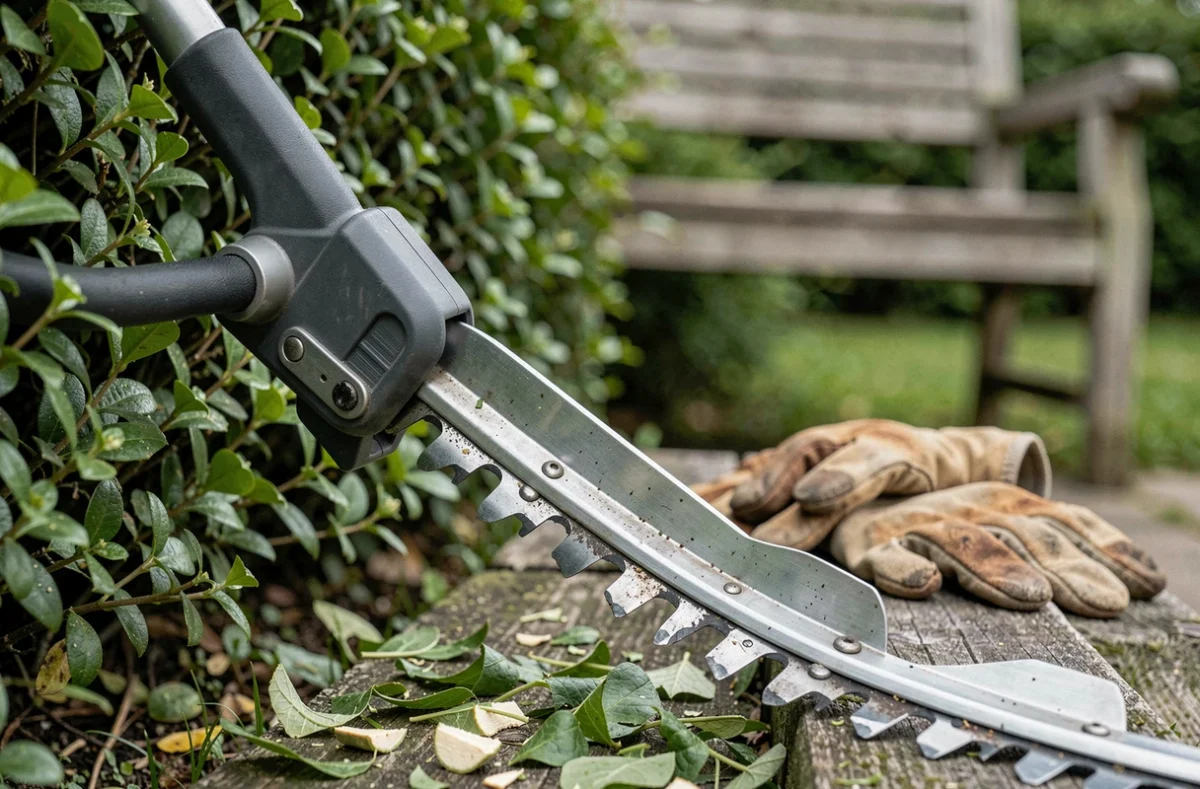
- The spacing of the teeth (also called “cutting pitch”) determines the maximum diameter of branches that the tool can cut. The wider the spacing, the thicker the branches you can cut.
Choose the tooth spacing based on the type of plants that make up your hedge. A cherry laurel produces thicker branches than a privet, for example.
Repairability and spare parts: a criterion of durability often overlooked
A telescopic hedge trimmer represents an investment. Keeping it functional for several seasons means being able to replace wear parts, especially the blade and the battery.
Since 2023, certain categories of powered gardening tools are subject to the obligation of spare parts availability for at least five years. Before purchasing, check with the manufacturer that the parts for the targeted model remain available and at what price. A replacement blade that is unavailable after two years turns a good tool into waste.
Established brands like Stihl, Husqvarna, or Bosch generally have networks of repairers and well-stocked parts catalogs. For less well-known brands, inquire before finalizing your order.
Trimming period and local regulations: what to check before starting
Buying the right tool does not exempt you from trimming at the right time. Regulations regarding hedge trimming are not uniform across France.
The French Office for Biodiversity recommends avoiding hedge trimming from March 15 to July 31 to protect nesting. The LPO extends this recommendation until August 31. For individuals, specific constraints often depend on a prefectural or municipal decree.
- Consult the town hall or prefecture to know the specific dates for your municipality.
- Visually inspect the hedge before any trimming, even outside sensitive periods: an occupied nest may be present at any time of the year.
- Nests and eggs of protected species are protected by law, regardless of the season.
Trimming in September or October generally remains the safest period, provided you have checked local rules and the absence of active nests.
The best telescopic hedge trimmer is not the most powerful or the most expensive. It is the one that corresponds to the weight your arms can handle, the type of hedge you maintain, and the frequency of your cutting sessions. Take the time to compare the availability of spare parts before deciding: a repairable tool remains effective much longer than a disposable model.