A dripping tap, medication stored too high, a hallway cluttered with shoes: in a household where an older adult or someone with reduced mobility lives, these everyday details can become real obstacles. Making life easier at home is about more than saving time on housework. It also means rethinking how each room is organized so everyone can live there safely, without leaving family caregivers to shoulder the logistical burden alone.
Indoor air quality: the step home-care tips often overlook
We think about tidying, cleaning and decluttering. Ventilation rarely comes to mind. Yet the Île-de-France Regional Health Agency recommends opening the windows for ten minutes a day, even in winter, to clear indoor pollutants that build up when we air out our homes less often.
This matters even more in a home where someone with declining independence spends most of the day indoors. Pollutants released by cleaning products, scented candles and older building materials can linger in the air.
The ARS recommends choosing cleaning products based on how they will actually be used and following the instructions. For example, using a multi-surface cleaner undiluted when it is meant to be diluted releases more volatile compounds without cleaning any better. You can find useful reminders about everyday prevention habits at utileauquotidien.fr.
One practical idea is to stick a small visual reminder (a pictogram showing an open window) on the fridge or front door. For an older person living alone, this cue can help make ventilation part of their routine without outside assistance.
Adapt the kitchen and storage space for a multigenerational household
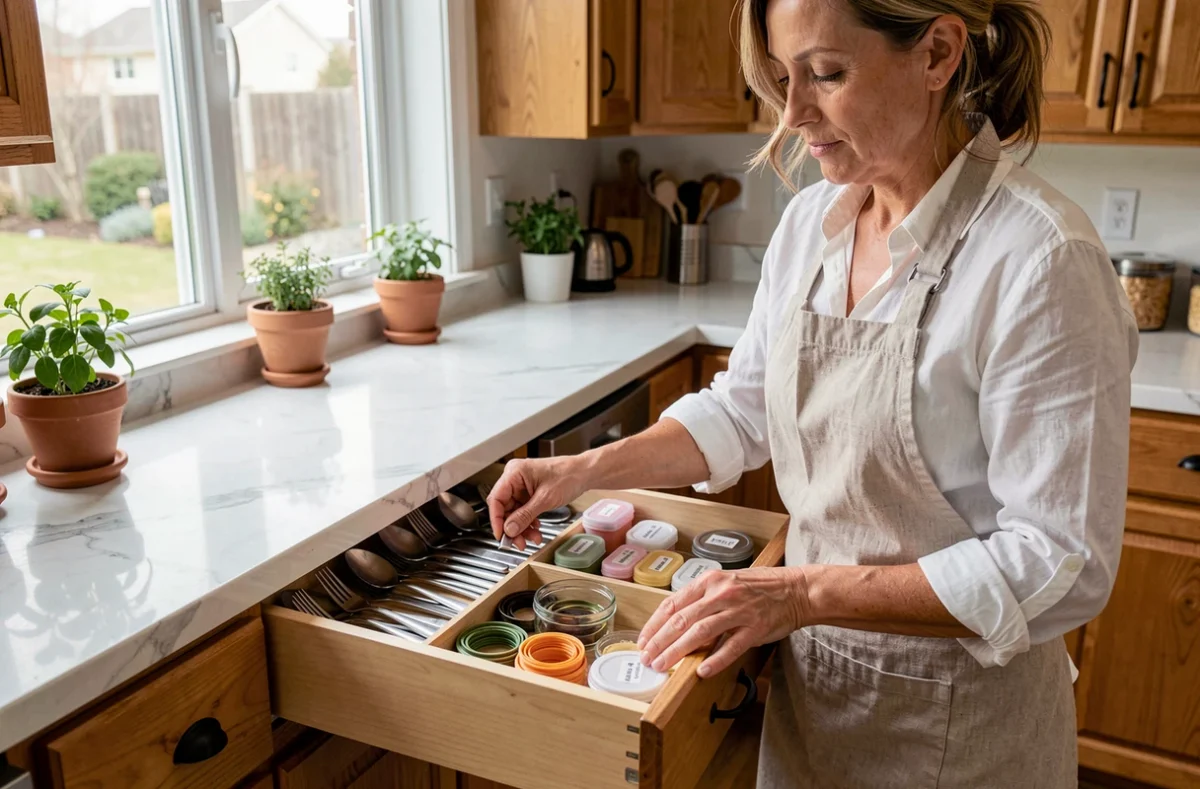
The kitchen is where most repetitive tasks happen: preparing meals, putting away groceries and cleaning the countertop. When you live with an older parent, every item stored up high can pose a safety risk. Store everyday plates, glasses and utensils in lower cupboards or at chest height instead.
A turntable in a corner cupboard makes it easier to reach items without bending or twisting. Pull-out drawers are a better option than fixed shelves: you can see everything at a glance without reaching to the back.
Sort items by how often they are used
The principle is simple: keep everyday items within easy reach. Move things used once a month to higher or deeper storage areas. Apply this approach room by room, starting with the kitchen and bathroom, where falls are most likely to happen.
- Keep daily medication in a pill organizer on the countertop, not in a high medicine cabinet.
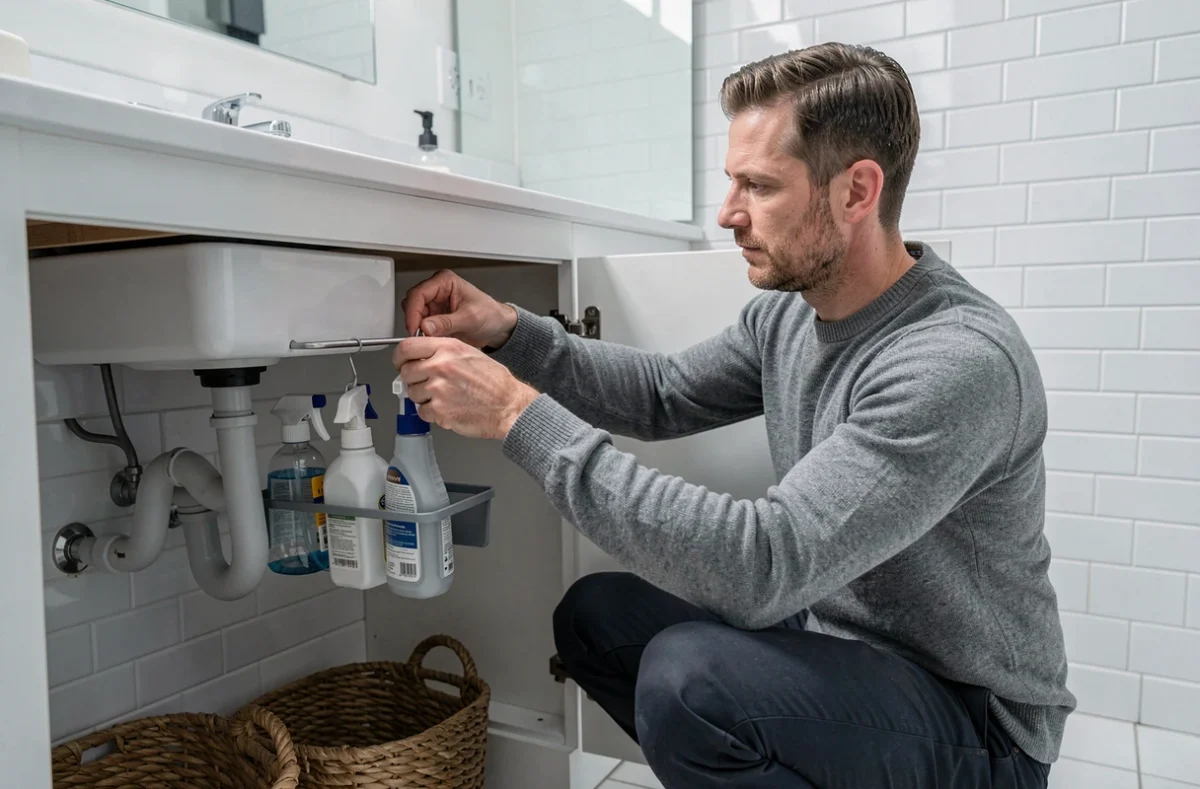
- Store the most frequently used cleaning products (sponge, dish soap, multi-surface spray) under the sink in a handled caddy that is easy to pull out.
- Keep heavy appliances (food processor, pressure cooker) on a low shelf or a rolling cart to avoid lifting while off balance.
Home care services: a framework that makes a difference for family caregivers
Since January 1, 2024, the regulatory framework for home care services has allowed them to combine help with everyday tasks, social support and measures to prevent loss of independence. In practice, a single service can coordinate help with housework, meal preparation and mobility support.
For families, bringing these services together makes things easier to organize. There is no longer a need to manage three separate contacts (a housekeeper, a home care worker and a prevention organization). A single point of contact handles scheduling, easing the mental load on family caregivers.
How this changes everyday life at home
The care worker knows the home and can spot hazards (a loose rug or poor lighting in the hallway) and flag any changes that may be needed. Regular outside input helps prevent problems from building up and leading to a fall or other incident.
The benefits vary depending on the department and the services available locally, but the principle is the same everywhere: coordinated support instead of isolated visits.

Cleaning and housework: three habits that last
The most effective cleaning routines are the ones you barely notice. They take just a few minutes, fit into an existing routine and require no special motivation.
Wiping down the countertop right after preparing a meal takes less than two minutes and prevents dishes from piling up and becoming discouraging. Wipe, put things away and move on.
Second habit: start a load of laundry in the morning before heading out, or during breakfast. In the evening, all you need to do is hang it up. This routine stops dirty laundry from turning into an unmanageable pile by the end of the week.
Clean high-traffic areas first
Instead of scheduling a big weekly clean, focus on high-traffic areas: the entryway, kitchen and bathroom. The rest of the home (bedrooms, office) can be cleaned less often without any noticeable impact.
- Sweep or vacuum the entryway every other day to clear away dust and dirt brought in from outside.
- Air out the bathroom after every shower and rinse it down once a week to limit limescale buildup.
- Disinfect kitchen handles and the countertop every evening, in addition to cleaning up after meals.
For someone with declining independence, a lightweight cordless vacuum or a spray mop (with a built-in mop) reduces physical effort. Avoid heavy buckets of water that need to be carried and wrung out.
Making everyday life easier at home depends less on spectacular hacks than on organizational choices suited to the people who actually live there. A pill organizer within easy reach, a home aired out for ten minutes a day and coordinated support that eases the burden on family caregivers: these small adjustments can improve quality of life week after week.