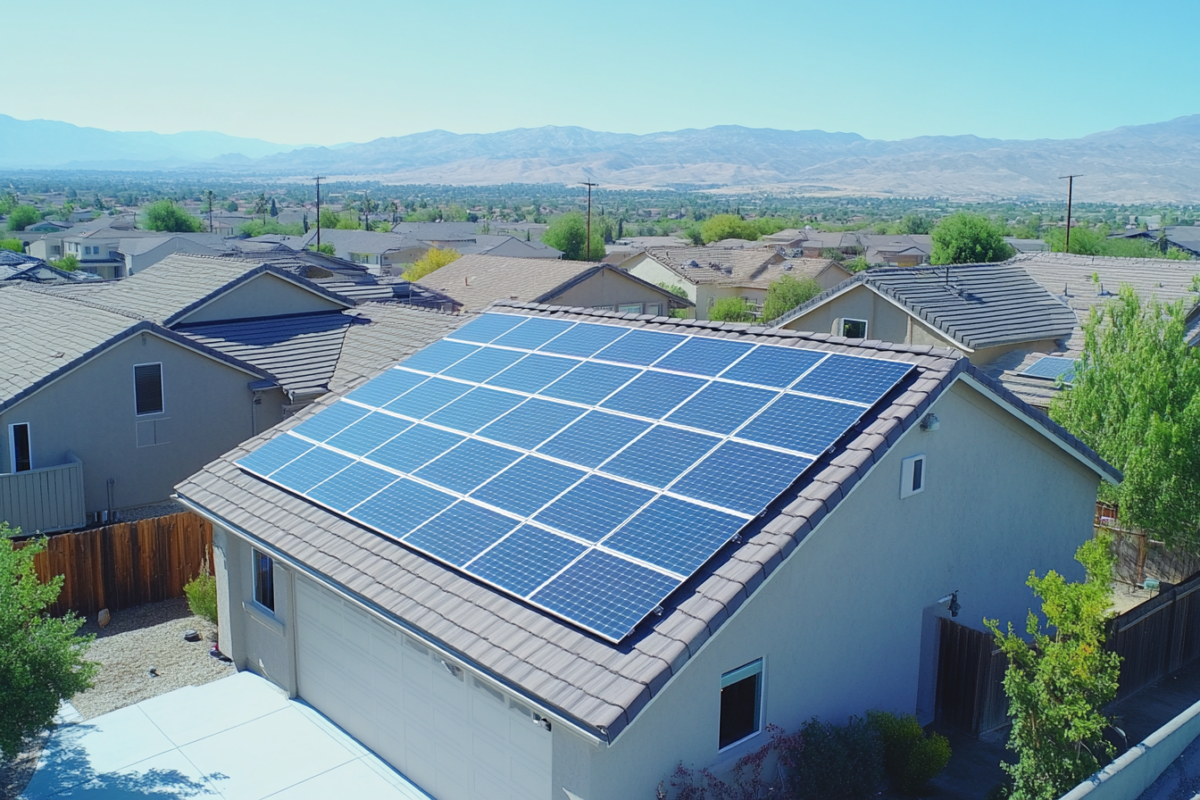
Solar energy, derived from the star that lights our days, has become an essential resource in our quest for sustainability and energy independence. Indeed, in the face of current environmental and economic challenges, the adoption of solar panels presents itself as a promising solution to reduce our carbon footprint while optimizing our energy consumption. The growing appeal of this technology lies not only in its ability to convert sunlight into electricity but also in the numerous benefits it provides to individuals and businesses. Solar panels are transforming the energy landscape by offering a viable alternative to traditional energy sources.
The Operation of Solar Panels
To grasp the essence of solar panels, it is essential to understand how they harness solar energy to produce electricity.
- Photovoltaic cells: Solar panels are made up of photovoltaic cells that convert sunlight into electrical energy. These cells are generally made from silicon, a semiconductor material.
- Photovoltaic effect: When sunlight hits the cells, it excites the electrons, creating a direct current. This phenomenon is known as the photovoltaic effect.
- Current inversion: The direct current generated is then converted into alternating current by an inverter, allowing its use by most household and industrial appliances.
The Environmental Benefits of Solar Panels
The adoption of solar panels offers significant benefits for the environment, a necessity in our current society.
Firstly, solar energy production does not generate greenhouse gases, thus reducing our climate impact. Unlike fossil fuels, this renewable energy source does not contribute to global warming.
Secondly, it preserves natural resources. The use of solar energy decreases dependence on non-renewable resources such as coal and oil, which, in the long term, contributes to the preservation of ecosystems.
Finally, solar panels require little water to operate, unlike other energy production methods that heavily rely on water. This makes it a particularly suitable solution for drought-prone regions.
Economic Impact and Drawbacks of Solar Panels
While solar panels promise many advantages, they can also pose an economic challenge for some.
On the positive side, there is a decrease in energy costs. Indeed, once installed, solar panels allow households and businesses to significantly reduce their energy bills, thus providing some independence from fluctuations in fossil fuel prices.
On the other hand, the initial installation cost can be a barrier for some individuals or small businesses. Although the price of panels has decreased in recent years, the investment remains substantial.
Finally, solar energy production heavily depends on weather conditions and sunlight, which can pose production issues in less sunny regions or during certain times of the year.
Future Perspectives and Innovations
Innovations in the field of solar energy continue to grow, promising a future resolutely focused on renewable energies.
- Bifacial technology: New generations of solar panels, such as bifacial panels, are capable of capturing sunlight from both sides, thus increasing their efficiency.
- Energy storage: Advances in energy storage, particularly through lithium-ion batteries, help address variability issues and provide energy even in the absence of sunlight.
- Architectural integration: The integration of solar panels into buildings, in the form of solar tiles or photovoltaic facades, transforms structures into energy sources.
- Artificial intelligence: The use of AI to optimize the orientation and efficiency of solar installations could further enhance the profitability of these systems.
The energy transition towards renewable solutions, like solar panels, is emerging as an imperative necessity to address the environmental and economic challenges of our time. The constant development of this technology, coupled with advances in storage and efficiency, paves the way for a future where green energy will play a central role in our lives. Although challenges remain, particularly regarding initial costs and climate variations, the appeal of solar energy remains strong, driving innovations and reinforcing the positive perception of renewable energies. Solar panels, as pillars of this transformation, continue to attract and convince with their promises of clean and sustainable energy, thus shaping the energy landscape of tomorrow.