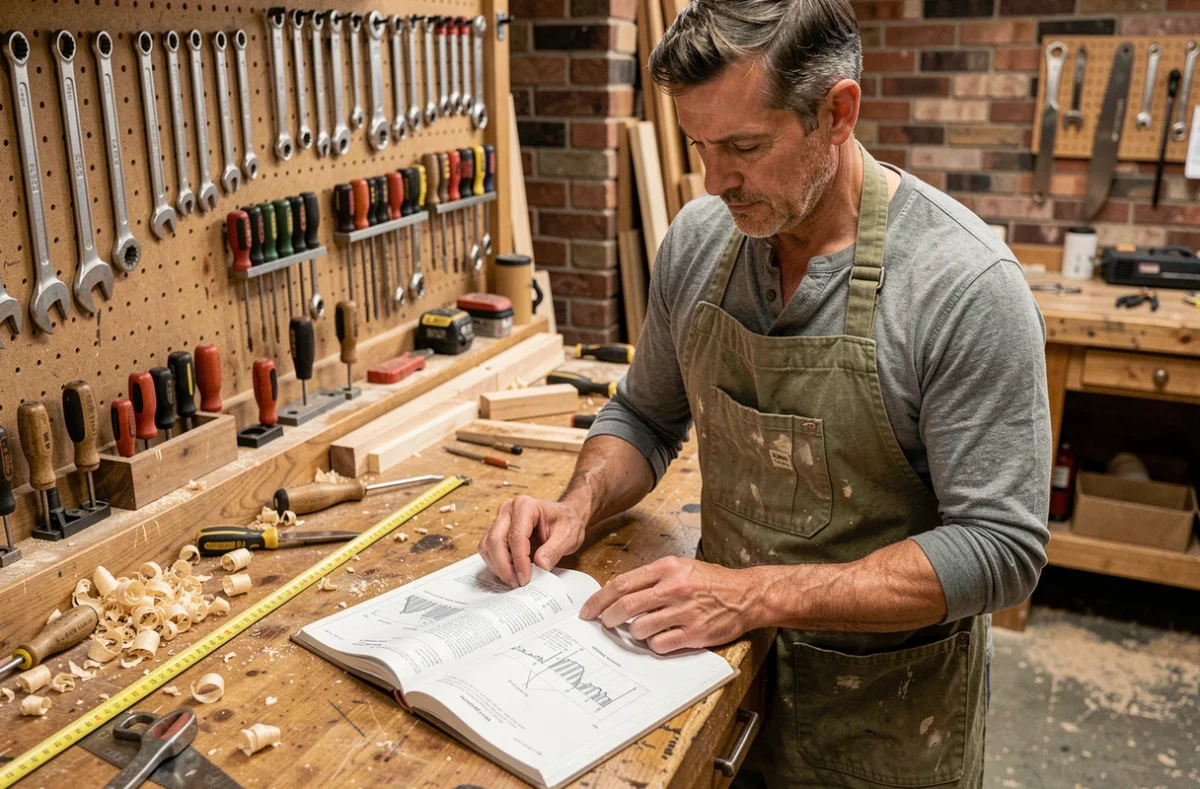
When you find yourself on a Sunday morning in front of a leaking faucet or a socket that needs replacing, the first question is not “which tool to buy” but “where to find the right method.” DIY like a pro first requires knowing where to look for reliable information that precisely addresses the problem at hand. Online resources dedicated to DIY have multiplied, but their quality varies significantly.
Construction Waste Sorting: A Constraint That DIY Guides Overlook
There is a lot of talk about tools, installation techniques, or finishes. There is much less discussion about what happens after the work is done. When renovating a bathroom or tearing down a partition, you produce rubble, scraps of drywall, leftover glue, and plaster.
The REP PMCB system, established in 2023, regulates the collection and treatment of these construction waste materials. In 2025, a moratorium was announced, and a reorganization is expected regarding the recovery methods and funding. In practical terms, the free recovery of construction waste is not automatic. It depends on prior sorting, accepted flows, volumes, and the use of a designated collection point.
A mixed deposit or one made outside the appropriate network may be refused or charged. For an individual renovating their kitchen, this can sometimes represent an unexpected cost of several dozen euros. Before starting a project, it’s wise to check the deposit conditions with your local waste facility or the distributor from whom you purchase materials.
To navigate the practical sheets covering these types of topics, you can find all the pages of Ben Le Bricoleur that group content categorized by theme, from plumbing to end-of-project management.

Online DIY Resources: Distinguishing Useful Tutorials from Hollow Content
Typing “how to lay tiles” into a search engine returns hundreds of results. The problem is not a lack of content; it’s sorting through it. Many pages compile generic advice without ever delving into the technical details that make the difference between a clean result and a mediocre one.
What Distinguishes a Good Practical Guide
A useful tutorial starts from a concrete situation and follows it through to completion. For example, to replace a flush mechanism, it is not enough to say “unscrew the old one and screw in the new one.” A good guide specifies the type of mechanism (cable, pull, dual control), indicates how to turn off the water supply if the shut-off valve is stuck, and notes the seals that should be replaced systematically.
Reliable content mentions the applicable standards when they apply. In domestic electricity, for example, safety distances around a water point are regulated. An article that does not address this is incomplete, even dangerous.
- Check that the guide specifies the necessary tools with their characteristics (drill bit diameter, blade type, minimum power)
- Ensure that the steps include intermediate checkpoints, not just the final result
- Favor content that highlights common mistakes and their consequences, not just the ideal procedure
Reuse of Materials: Smart DIY Before Buying New
Before ordering new materials for a renovation project, there is a path that many DIYers overlook: the reuse of materials from demolition or renovation sites. You can find interior doors, structural elements, vintage cement tiles, or sanitary fixtures in perfect condition.
The regulatory framework supports this approach. For significant demolition or renovation operations, the PEMD (Products, Equipment, Materials, and Waste) diagnosis allows for identifying reusable elements before work begins. A material properly deposited and intended for a new use can retain its status as a product rather than becoming waste.
Feedback on this point varies by region and collection systems, but platforms for reselling second-hand materials are developing. You can find reclaimed solid wood flooring, cast iron radiators, and salvaged bricks. The price is often half that of new materials, and the quality of old materials (solid wood, cast iron, artisanal terracotta) often exceeds that of current entry-level equivalents.
Organizing Your DIY Workshop: Storage and Safety in Daily Life
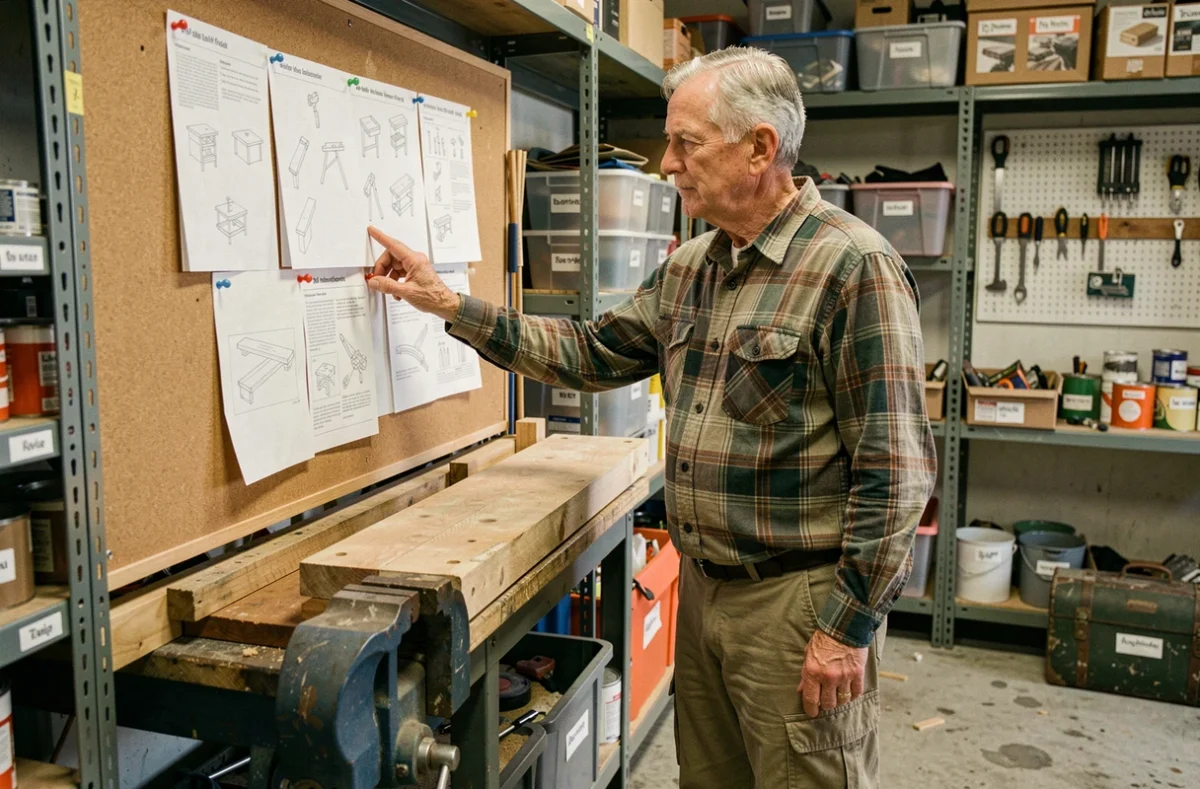
The impact of a well-organized workshop on work quality is often underestimated. Searching for a drill bit for ten minutes in the middle of assembling furniture is the best way to rush the next step out of impatience.
A pegboard costs little and frees up the workbench. You can hang the most frequently used tools within reach: screwdrivers, pliers, wrenches, level. Consumables (screws, plugs, ties) can be stored in labeled compartment boxes.
Protective Equipment to Keep Accessible
Storing your safety glasses at the back of a drawer guarantees that you won’t wear them. Safety equipment should be visible and immediately available:
- Safety glasses for grinding, drilling, and cutting
- Gloves appropriate for the type of work (leather for handling, nitrile for chemicals)
- Hearing protection for noisy power tools like angle grinders or drills
- Minimum FFP2 mask for sanding and work generating fine dust
Wearing your PPE for every intervention, even short ones, prevents the majority of domestic accidents related to DIY. A projection into the eye during a simple grinding task takes less than a second.
Effective DIY relies less on the accumulation of tools and more on the ability to find the right information at the right time, anticipate waste management, and work in an organized space. Resources exist, provided you select them with the same care you choose your materials.